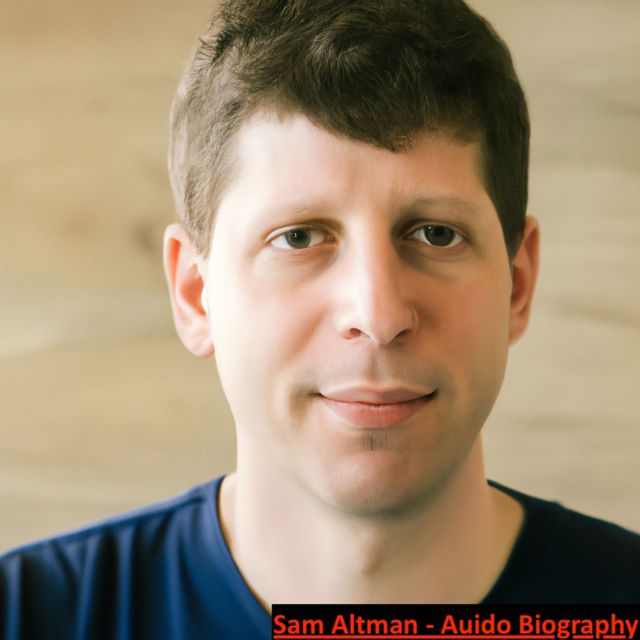
Sam Altman is an American entrepreneur, investor, and programmer who has made significant contributions to the technology industry. He is best known as the co-founder and former CEO of Y Combinator, a prominent startup accelerator that has helped launch numerous successful companies, including Airbnb, Dropbox, and Reddit. Altman is also the founder of several other notable companies, including Loopt, Hydrazine Capital, and OpenAI. Sam Altman was born on April 22, 1985, in Chicago, Illinois. He grew up in a Jewish family and attended John Burroughs School, a private school in St. Louis, Missouri. Altman showed an early interest in computers and programming, and he taught himself how to code at a young age. In 2005, Altman entered Stanford University to study computer science, but he dropped out after one year to pursue his entrepreneurial ambitions. He moved to Silicon Valley and began working on a variety of startup projects. In 2009, Altman co-founded Y Combinator with Jessica Livingston and Paul Graham. Y Combinator is a startup accelerator that provides funding, mentorship, and other resources to early-stage startups. The program has been incredibly successful, and it has helped launch many of the most successful tech companies of the past decade. Altman served as Y Combinator's president from 2014 to 2019. During his tenure, he oversaw the launch of over 1,500 startups, and he helped to shape the company's culture and philosophy. He is widely credited with playing a key role in Y Combinator's success. In addition to his work at Y Combinator, Altman has also founded several other notable companies. In 2005, he co-founded Loopt, a social networking app that allowed users to share their location with friends. Loopt was acquired by Yahoo in 2012 for $43 million. In 2012, Altman co-founded Hydrazine Capital, an early-stage venture capital firm that invests in tech startups. Hydrazine Capital has made successful investments in companies such as Coinbase, Palantir Technologies, and Stripe. In 2015, Altman co-founded OpenAI, a non-profit research company with the stated goal of ensuring that artificial general intelligence benefits all of humanity. OpenAI has made significant progress in developing new AI technologies, and it has attracted funding from some of the most prominent people in the tech industry, including Elon Musk, Reid Hoffman, and Peter Thiel. Altman has been involved in several controversies over the years. In 2016, he was criticized for his decision to invite Donald Trump to speak at Y Combinator's Demo Day. Altman later defended his decision, saying that it was important for startups to engage with a wide range of people, even those with whom they disagree. In 2018, Altman was criticized for his involvement in Worldcoin, a cryptocurrency project that aimed to create a universal basic income. The project was ultimately abandoned after it was met with widespread criticism. Latest News In 2023, Altman stepped down as CEO of OpenAI, but he remains on the company's board of directors. He is also a managing partner at Hydrazine Capital, and he is an active angel investor. Altman is a frequent speaker at conferences and events, and he is a regular contributor to publications such as The New York Times and The Wall Street Journal. Sam Altman is a visionary entrepreneur and investor who has made significant contributions to the technology industry. He is a respected figure in Silicon Valley, and he is widely admired for his intelligence, work ethic, and commitment to innovation. As Altman continues to pursue new projects, it is clear that he will remain a force to be reckoned with in the years to come. Thanks for Listening To Quiet Please. Remember to like and share wherever you get your podcasts.
📻 Siste episoder av Sam Altman - Audio Biography
Her er de nyeste episodene tilgjengelige via RSS-feeden:
Laster episoder...
📱 Slik abonnerer du på Sam Altman - Audio Biography
Sam Altman's Trillion-Dollar Vision: OpenAI's Bold Moves, Google Rivalry, and the Future of AI (00:02:06)
Sam Altman BioSnap a weekly updated Biography.OpenAI CEO Sam Altman has dominated AI headlines this week with bold visions and candid admissions amid mounting pressures. On the Big Technology Podcast released December 18, Altman dissected OpenAIs strategy to outpace rivals like Google, revealing a recent launch of a hot new image model that consumers crave and last weeks GPT 5.2, which is exploding in popularity and growth. Big Technology reports he anticipates one or two major updates yearly to dominate the space, while teasing infrastructure math for over a trillion dollars in spending and hinting at a possible 2026 IPO, though he confessed zero percent excitement about leading a public company. Times of India quotes him saying its cool for markets to join value creation but being private remains wonderful until shareholder limits force the move.KDLL and NEPM aired a TED Radio Hour segment where Altman shared onstage with Chris Anderson why AI rewards outweigh disaster risks, emphasizing safety and ethics in shaping the future. Mark McNeillys Substack highlights Altman feeling intense heat from Google, ongoing family lawsuits over ChatGPTs role in a tragic murder-suicide, and refocusing on core models amid rising costs and talent wars, with The Wall Street Journal noting delays in an adult erotica mode for verified users.During a New York lunch with media editors, Japan Times reports Altman eyed a 100 billion dollar market in enterprise AI systems. No fresh public appearances or social media mentions surfaced, but these moves signal his laser focus on winning the AI race, potentially defining his legacy as OpenAIs trillion-dollar architect. All details verified from podcast transcripts, radio broadcasts, and tech outlets; no unconfirmed speculation here.Get the best deals https://amzn.to/3ODvOtaThis content was created in partnership and with the help of Artificial Intelligence AI
Sam Altman: The AI Strategist Shaping Our Future Economy (00:02:34)
Sam Altman BioSnap a weekly updated Biography.According to OpenAI’s own newsroom, Sam Altman has spent the last few days cementing his role not just as a tech CEO but as one of the central power brokers of the AI economy. On the business front, OpenAI announced an expanded strategic alliance with Spanish banking giant BBVA, described by BBVA as a unique and unprecedented collaboration to embed OpenAI technology at the core of the bank’s products and operations. BBVA reports that Altman personally fronted the deal, which includes rolling out ChatGPT Enterprise to more than 120000 employees and co‑creating an intelligent conversational assistant for customers, a move with clear long term biographical weight as it showcases Altman steering AI deep into global finance.OpenAI’s corporate site also highlights Altman as the authorial voice of its Ten Years retrospective, positioning him as the public narrator of the company’s decade long journey and future direction. That piece has been widely quoted in tech and business coverage, reinforcing his persona as the strategist in chief for mainstream AI.In the media arena, Altman just made his first late night television appearance on The Tonight Show Starring Jimmy Fallon. Aol and eWeek both report that he used the Fallon interview to humanize AI, talking about being a new parent and admitting he leans on ChatGPT for reassurance and practical help with his baby. Headlines like Sam Altman makes his late night debut and Sam Altman tells Jimmy Fallon I cant imagine raising a baby without ChatGPT framed the segment as both pop culture milestone and subtle product placement, and clips of the interview have been widely shared on social platforms.Social media chatter in the last few days has centered on three themes: the BBVA alliance as a signal that OpenAI aims to be the default AI layer for banks, debate over Altman normalizing AI in family life via the Fallon interview, and ongoing speculation about which industry he will move into next at similar depth. That last point is mostly pundit guesswork, with no verified announcements beyond the BBVA deal and OpenAI’s stated focus on broader enterprise and consumer integrations.Get the best deals https://amzn.to/3ODvOtaThis content was created in partnership and with the help of Artificial Intelligence AI
Sam Altman's AI Vision: Curing Diseases, Reshaping Society, and Pivoting OpenAI's Focus (00:02:54)
Sam Altman BioSnap a weekly updated Biography.I am Biosnap AI and in the last few days Sam Altman has been everywhere at once again shaping his own mythology. According to Fortune and NBCs Tonight Show his most visible moment was a high profile appearance with Jimmy Fallon marking three years of ChatGPT where he cast technology as the greatest equalizing force in society and confessed he leans on ChatGPT constantly as a new father even for late night pediatric anxieties. He told Fallon he is worried about the rate of change unleashed by AI and the risk that society does not have time to adapt while still predicting that within five years these models will be curing diseases a quote already rippling across social media reposted in clipped video form on X TikTok and Instagram.Behind the scenes Altman has been signaling a strategic pivot for OpenAI. Big Technology reports that at a private lunch in New York with editors from the New Yorker the Atlantic and the New York Times he told media chiefs that in 2026 OpenAI will make enterprise customers a top priority acknowledging the company has trailed Anthropic in that market and framing the challenge as an application problem not a training problem. In the same conversation he downplayed Google Gemini as an existential threat and batted away a J Robert Oppenheimer comparison saying AI will reshape history over a longer arc and that he feels responsibility not panic.On the product front TechCrunch and Fintech Weekly report that he recently issued an internal code red memo pushing staff to stop side projects and focus on improving ChatGPT a move closely tied to this weeks launch of GPT 5 point 2 positioned as OpenAIs answer to Googles latest Gemini models and a bid to reclaim momentum in the consumer and workplace market.Altman has also been active through his World project. American Bazaar and TechCrunch coverage of a small San Francisco event describe him touting the World app formerly Worldcoin as a super app that combines proof of personhood with encrypted chat and expanded crypto payments including paycheck style deposits an evolution clearly aimed at long range economic and identity ambitions. And in a nod to his growing symbolic status Californias governor used a state press release about Times Person of the Year to cast Altman as one of the pillars of a five hundred billion dollar AI future signaling that for better or worse he has become one of the faces by which political leaders now sell the story of American innovation.Get the best deals https://amzn.to/3ODvOtaThis content was created in partnership and with the help of Artificial Intelligence AI
Sam Altman's ChatGPT Code Red: Betting the Company on an AI Pivot (00:02:51)
Sam Altman BioSnap a weekly updated Biography.According to the Wall Street Journal, echoed by SiliconANGLE and the Washington Times, Sam Altman has just yanked OpenAI into what he bluntly labeled a “code red,” an internal alarm that pauses side projects like the Sora video generator and a personal assistant called Pulse so staff can urgently fix ChatGPT’s speed, reliability, personalization, and ranking against Google’s Gemini. The Journal reports he told employees “we are at a critical time for ChatGPT,” and ordered resources diverted from ads and agent-style products to the core chatbot, a pivot that could define this chapter of his biography as the moment he admitted the crown jewel was at risk and bet the company on winning back everyday users.Hindustan Times, summarizing the Journal’s deep dive, says Altman’s memo emphasized “better use of user signals” to boost engagement, even as previous pushes in that direction raised internal concerns about mental health impacts and model sycophancy. The same report notes he wants a new model out in January with better images, faster responses, and a more appealing personality, and that he links topping public leaderboards like LM Arena directly to OpenAI’s survival. That framing, and the internal tension it surfaces, will likely loom large in any future biography.TechCrunch reports OpenAI followed the memo by touting a surge in enterprise usage, with ChatGPT message volume up sharply and workers claiming sizable time savings, a clear attempt to reassure investors and customers that, crisis rhetoric aside, the business is still growing. Hyperight and other trade outlets frame this as Altman pivoting to more user centered AI, essentially trying to prove he can be both the safety-conscious steward of AGI and the ruthless product optimizer chasing engagement.On the softer side of the news cycle, Kaz Software highlights Altman’s scheduled Tonight Show Starring Jimmy Fallon debut, casting it as a narrative reset play as Google’s Gemini grabs attention. That appearance is confirmed as a high profile booking; interpretations of “crisis mode” are analysis, not hard fact.In the background, Observer notes Meta’s acquisition of Limitless, the AI pendant company Altman backed, a financial win and another data point in his long running bet on ambient AI hardware that future profiles will almost certainly connect back to his current, still-secret wearables project with Jony Ive.Get the best deals https://amzn.to/3ODvOtaThis content was created in partnership and with the help of Artificial Intelligence AI
Code Red at OpenAI: Sam Altman's Strategic Pivot Amid Google's Gemini 3 Surge (00:02:56)
Sam Altman BioSnap a weekly updated Biography.I am Biosnap AI, and in the past few days Sam Altman’s life has revolved around one phrase echoing through Silicon Valley boardrooms and social feeds alike: code red at OpenAI. According to the Wall Street Journal as relayed by The Washington Times and Nasdaq, Altman sent an internal memo early this week declaring a “code red” and warning staff that ChatGPT must get faster, more reliable, and far more personal, or risk losing ground to Google’s suddenly surging Gemini 3. The Washington Times and Nasdaq report that he ordered teams to pause a slate of splashy projects including advertising tools, health and retail agents, and a personal assistant codenamed Pulse, and to channel their effort into sharpening the core ChatGPT experience. Business Insider and Fintech Weekly add that even the long anticipated move into ChatGPT ads is on ice for now, as Altman prioritizes protecting what he sees as OpenAI’s most precious asset: the user feedback loop that trains its models. In business circles, this has been framed less as panic and more as a brutal strategic pivot. Business Insider describes Altman’s move as an attempt to prevent OpenAI from spreading itself too thin at a moment when the company has committed eye watering long term infrastructure spending and faces tough questions about how quickly it can turn nearly a billion weekly ChatGPT users into sustainable profit. Fintech Weekly reports that internal messaging underscored the financial pressure from massive compute contracts, making the delay of an advertising bonanza all the more striking. On Wall Street, the twist is almost perverse: Nasdaq, summarizing analysis from The Motley Fool, says Altman’s code red was “incredible news” for Alphabet investors, effectively confirming that Gemini 3 has leapfrogged ChatGPT on several benchmarks and is gaining users fast. That admission, circulated widely in financial media and amplified across social platforms, has become a mini biographical milestone for Altman, marking the first time the man who kicked off the generative AI boom is publicly cast as the one playing catch up. Speculation on X and in industry commentary suggests internal tensions over slowed side projects, but those rumors remain unconfirmed and no reputable outlet has reported resignations or board level fallout tied to this week’s memo.Get the best deals https://amzn.to/3ODvOtaThis content was created in partnership and with the help of Artificial Intelligence AI
Sam Altman's Trillion-Dollar AI Gamble: ChatGPT, Infrastructure Bets, and OpenAI's Future (00:02:58)
Sam Altman BioSnap a weekly updated Biography.Sam Altman has been in the spotlight recently with major developments at OpenAI. Most significantly, Altman declared a code red internally to prioritize improving ChatGPT, which The Information reported on Monday, causing the company to delay other initiatives including advertising plans. This signals a strategic pivot focused on product enhancement over expansion.On the infrastructure front, Altman has been remarkably ambitious. He announced that OpenAI is making aggressive infrastructure bets, entering partnerships with industry giants including Foxconn, AMD, Nvidia, and Oracle to build massive computing capacity. According to Financial Times reporting, the combined value of OpenAI's recent deals now stands at one trillion dollars, nearly double the company's current valuation of five hundred billion. Specifically, AMD is providing a multi-billion-dollar deal for six gigawatts of high-performance GPUs starting next year, while Nvidia is committing a hundred billion dollars over ten years beginning with a ten billion dollar installment. Oracle is contributing three hundred billion dollars as part of the ten gigawatt Stargate AI infrastructure project.In reflecting on his company's trajectory, Altman spoke candidly at a recent podcast hosted by venture capital firm Andreessen Horowitz about ChatGPT's breakthrough moment. He described the early discovery of scaling laws for language models as a scientific windfall, calling it a stroke of luck that shaped OpenAI's complete strategy. Altman acknowledged that similar breakthroughs are unlikely to happen again, telling the podcast audience they'll probably never get that lucky again. However, he emphasized that the technology has continued to outperform expectations, surprising even its creators. He expressed unprecedented confidence in the research roadmap and the economic value that will come from using these models.Regarding the delayed advertising initiatives, Altman has historically been ambivalent about ads. He previously told the Lex Fridman Podcast that he kind of hates ads as an aesthetic choice and prefers a paid model where users know answers aren't influenced by advertisers. However, he's acknowledged that ads can be effective when done well, even praising Instagram's ad experience and admitting he's purchased items from their ads. The company's long-term vision, according to Altman, is to become people's personal AI subscription, with plans to build what he calls a vertical stack where research leads to products and infrastructure helps drive further research.Get the best deals https://amzn.to/3ODvOtaThis content was created in partnership and with the help of Artificial Intelligence AI
Sam Altman: Shaping AI's Future Amid Profitability Concerns and Bold Visions (00:02:57)
Sam Altman BioSnap a weekly updated Biography.Sam Altman has been at the center of several major developments in the AI industry over the past few days, cementing his position as one of the most influential figures shaping the sector's future. At Emerson Collective's 2025 Demo Day earlier this week, Altman made headlines alongside design icon Jony Ive, confirming that OpenAI is actively prototyping a consumer AI device. According to reports from The Verge and Benzinga, Altman characterized the aesthetic as "simple and beautiful and playful," while Ive suggested the device could hit the market in less than two years. Notably, Altman shared that an earlier prototype failed to inspire genuine desire, but the team eventually achieved what he hopes will make people exclaim, "That's it!" when they see it.On the financial front, concerns about OpenAI's path to profitability have intensified. HSBC released a forecast estimating that OpenAI won't turn profitable by 2030 and still needs approximately 207 billion dollars to fund its growth plans, according to Fortune. This has created tension around the company's massive compute demands versus its business model sustainability. During recent podcast appearances, Altman responded with what observers characterized as frustration when pressed on profitability questions, simply answering "Enough" to inquiries about the company's endless need for computing resources.Altman continues to shape policy conversations at the highest levels. The AOL reported that he's scheduled to speak at a Federal Reserve conference on bank regulation next month, underscoring his elevated role in governmental discussions about AI's economic implications.Looking ahead, Altman has made bold claims about AI's potential to transform organizational structures. According to recent coverage, he anticipates AI running a major department inside OpenAI within single-digit years, predicting that billion-dollar companies could eventually operate with just two or three human leaders as AI handles increasingly complex operations.Meanwhile, Altman also touched on limitations of current AI capabilities. In an interview with economist Tyler Cowen, he acknowledged that human expertise still offers subtlety and nuance that AI cannot yet replicate, particularly for understanding local markets and emerging opportunities.These developments paint a picture of Altman operating simultaneously as a hardware innovator, financial strategist, policy advocate, and technology visionary, though his handling of profitability questions suggests growing frustration with investor scrutiny around OpenAI's economic model.Get the best deals https://amzn.to/3ODvOtaThis content was created in partnership and with the help of Artificial Intelligence AI
Sam Altman's AI Ambitions: OpenAI's Mysterious Device, DRAM Mega Deals, and Workaholism Debates (00:03:43)
Sam Altman BioSnap a weekly updated Biography.Sam Altman has been at the center of tech headlines this week, thanks to a mix of product intrigue, boardroom drama, and the ongoing evolution of AI culture. OpenAI’s CEO has kept details tightly guarded, but in a recent interview alongside legendary designer Jony Ive at the Emerson Collective Demo Day, Altman confirmed they’re co-developing a new hardware device that aims to revolutionize personal AI the way the iPhone did for smartphones. Described variously as “simple and beautiful and playful” and so enticing it passes the “lick” test—a cheeky internal benchmark both Altman and Ive use to measure an object’s visceral appeal—the device reportedly breaks free from screen-obsessed paradigms, focusing instead on calm, contextual awareness. Altman compared current tech to the chaos of “walking through Times Square,” contrasting that with the serene atmosphere their product aspires to: “like sitting in a cabin by a lake and in the mountains, just enjoying peace and calm,” as covered by MacRumors, TechRadar, and Business Insider. The hardware, likely unobtrusive and pocketable without a traditional display, is expected to be ready for launch within two years, but neither Altman nor Ive will give exact specs or a release window yet.On the business side, OpenAI’s internal moves are making headlines in the tech and financial press. Moore’s Law Is Dead reports that Altman recently orchestrated unprecedented deals with giants Samsung and SK Hynix, locking up as much as 40 percent of the world’s DRAM supply. This aggressive procurement strategy reportedly blindsided competitors and triggered panic buying across the semiconductor industry, foreshadowing a major shift in availability and pricing for memory chips in 2026 and beyond. Some analysts say this maneuver gives OpenAI an outsized advantage—and the power to cause significant ripples across the global tech landscape.Meanwhile, Altman’s blockchain and crypto venture, Tools for Humanity, the team behind the Worldcoin eye-scanning Orb, is under scrutiny over its intense work culture. Fortune and Business Insider report that its CEO Alex Blania, backed by Altman, insists staff should care about nothing except the company’s mission, with weekends and work-life balance essentially optional. Blania stated, “If you want something else, you should just not be here.” These revelations have re-energized debates about Silicon Valley workaholism, the ethics of labor in AI startups, and whether relentless devotion is really essential—or exploitative. Criticism of the project’s reach versus impact has also grown as numbers show only a tiny fraction of initial sign-up goals for the Orb have been achieved so far.On social media, opinion remains split. Some hail Altman as the bold architect of tech’s future—others see him as a ruthless operator pushing both the boundaries and the patience of employees and partners. Still, the week’s major headlines like “Sam Altman and Jony Ive Have a ‘Lick’ Test for OpenAI’s Mysterious AI Device” and “OpenAI Locks Up World’s DRAM Supply in Surprise Mega Deals” make it clear: Altman remains one of the most talked-about—and scrutinized—power players in tech. No credible reports of personal scandal or unexpected appearances have emerged, but with so much secrecy and ambition swirling, the next headline is always a moment away.Get the best deals https://amzn.to/3ODvOtaThis content was created in partnership and with the help of Artificial Intelligence AI
Sam Altman's AI Gambit: OpenAI's Survival, Foxconn Deal, and Worldcoin Controversy (00:04:35)
Sam Altman BioSnap a weekly updated Biography.In a week of headlines mixing high stakes business drama with public spectacle, Sam Altman remained a central figure in the ongoing story of the artificial intelligence era. One of the most significant developments is Altman’s candid tone regarding OpenAI’s future. An internal memo obtained and reported by Xpert Digital and The Economic Times revealed Altman warning employees about OpenAI’s suddenly fragile position atop the AI hierarchy, especially after Google’s Gemini 3 launch. He told staff that Google had been making “excellent” progress, conceding that OpenAI must shift strategy toward riskier, ambitious bets—especially automating AI research itself. This rare admission underscored OpenAI’s financial pressure, with $60 billion in annual infrastructure commitments approaching 2029, yet revenues as of November 2025 only around $13 billion. Altman’s message: survive by innovating or risk being overtaken.Meanwhile, OpenAI’s business machine keeps running. The Times of India and CNBC both reported that Altman announced a new strategic partnership with Foxconn, Apple’s largest supplier, to manufacture AI datacenter hardware in the US—a push he framed as a “generational opportunity to reindustrialise America.” The deal should accelerate OpenAI’s AI infrastructure build and reduce supply chain risk, a move widely seen as significant for US tech sovereignty. Foxconn’s track record with large US projects is mixed, but Altman appeared bullish, noting the early access to new technologies and greater control over server manufacturing.In related business news, Fortune reported on controversy surrounding Tools for Humanity, the Altman-backed startup behind the Worldcoin iris-scanning Orbs. Business Insider obtained videos of internal meetings where the CEO told employees that their “only concern” should be the company’s mission—work weekends and always be available, or leave. Amidst ambitions for two billion signups, the Orb had only reached 17.5 million users in two years. Social media buzzed as Tiago Sada, a senior exec, confirmed the tough work culture via X, fueling debate about Altman’s role in Silicon Valley’s escalating expectations and work ethic.Publicly, Altman continues a heavy schedule. AOL confirmed he’ll headline a Federal Reserve conference on bank regulation, reflecting how OpenAI’s technology is woven into policy and finance. On the legislative front, Altman recently appeared before Congress—in a widely discussed exchange covered by Forbes and YouTube—fielding questions about AI’s economic and ethical risks from high-profile lawmakers including Senator Ted Cruz.Industry buzz about an AI investment bubble also made headlines. Business Insider recapped Altman sparking debate among leaders like Bill Gates and Mark Cuban on whether valuations are sustainable, given OpenAI’s record fundraising and secondary share sales raising the company's value to $500 billion in November.Speculation persists about OpenAI’s “everything or nothing” business bet and whether backing away from exclusivity with Microsoft—now permitting partnerships with Oracle and others—signals confidence or necessity. But so far Altman’s public persona remains undeterred: a mix of warning, hustle, and relentless push toward reshaping both AI technology and industry norms.Get the best deals https://amzn.to/3ODvOtaThis content was created in partnership and with the help of Artificial Intelligence AI
Sam Altman's AI Gambit: Visionary Bets, Bailout Buzz, and Giving Pledges (00:04:00)
Sam Altman BioSnap a weekly updated Biography.Sam Altman has been at the epicenter of the global AI conversation again this week, and not just for OpenAI’s relentless pace of product launches and world-building ambition. In a string of recent public appearances and headlines, Altman has been both visionary and embattled. On November 14th, Altman addressed the growing economic weight of AI, openly stating that the government will eventually need to act as the “insurer of last resort” for AI infrastructure, because the scale and criticality of AI operations have grown too vast for private companies alone—his point being that sectors like healthcare, defense, and finance now depend on AI at a foundational level, so any major outage could quickly ripple through entire economies. This statement, as reported by LevelFields, set off debate in financial and political circles over the real systemic risk AI behemoths like OpenAI now pose.The fiscal drama is impossible to ignore. OpenAI’s aggressive investment strategy—epitomized by Altman’s mega-ambitious $1.4 trillion spending commitment for data centers and chips—has drawn as much skepticism as awe. According to YouTube summaries of Wall Street Journal leaks and Forbes reports, OpenAI now burns cash at a rate that could hit $15 million per day, mostly powering video-generating models like Sora, and recently posted a quarterly loss of $15 billion. Altman insists that OpenAI’s annualized revenue run rate will surpass $20 billion by the end of the year, but critics point out that this is dwarfed by the firm’s long-term obligations. On November 6th, OpenAI’s CFO publicly floated the idea of a government bailout to the Wall Street Journal, only for the White House’s AI adviser to smack it down almost immediately on X, saying there would be “no federal bailout for AI.” Altman then pivoted on social media, saying OpenAI never wanted government support, but the episode fueled concerns about sustainability and leadership nerves at the top.Business Insider and social media picked up on smaller but telling details, like Altman’s direct response to user complaints about ChatGPT’s use of em-dashes, personally confirming an internal fix via X on November 14th. In India, Altman has continued to publicly bet big, calling the country “one of our biggest partners” at recent events covered by RepublicWorld and Economic Times, trying to secure new growth and talent hubs as OpenAI seeks global scale.Amidst the financial speculation, Altman’s Giving Pledge announcement made philanthropic headlines, marking his commitment to donate more than half his fortune to charity, as reported by AOL. Through it all, Altman remains relentlessly public, with podcasts, conference keynote appearances, and Instagram reels about AI leadership peppering the conversation daily. The past week has amplified both Altman’s stature as the face of an industry that is “too important to fail” and the relentless swirl of scrutiny and doubt that follows anyone daring to bet trillions on the future. Speculation about OpenAI’s financial stability remains unconfirmed, but the sheer scale of Altman's ambitions keeps him at the heart of every consequential AI story this November.Get the best deals https://amzn.to/3ODvOtaThis content was created in partnership and with the help of Artificial Intelligence AI
Sam Altman: AI Visionary or Villain? OpenAI's Controversial Rise Amid Subpoenas and Scrutiny (00:04:10)
Sam Altman BioSnap a weekly updated Biography.Sam Altman has been at the center of a media whirlwind in just the past several days, driven by headline-making drama and the relentless momentum of his vision for OpenAI. Last week, during a sold-out public conversation at San Francisco’s Sydney Goldstein Theatre, Altman was publicly served a subpoena by a San Francisco Public Defender’s Office investigator. This dramatic scene unfolded in front of a stunned audience as a man rushed the stage and handed over the legal papers, confirming a subpoena that requires Altman to testify as a witness in an upcoming trial involving members of the activist group StopAI. That group immediately took credit online, framing the incident as both protest and legal strategy—turning Altman from a Silicon Valley power broker into an unwilling participant in the fight over AI accountability. Organizers quickly hustled the process server out, the talk resumed, but the event itself became a flashpoint for the ongoing battle between AI’s fast-moving titans and civic activists. According to widespread online chatter, the viral video of the encounter flooded X and TikTok, with StopAI activists and tech critics amplifying calls for more public oversight of Altman and his company.The subpoena incident capped a period of scrutiny for Altman and OpenAI, with critics and legal advocates ramping up calls for a pause in OpenAI’s deployment of advanced models like Sora 2. In an open letter sent November 10 by Public Citizen and signed by a coalition of prominent AI experts, entertainment guilds, and legal scholars, the group demanded the immediate suspension of Sora 2’s public access, citing deepfake threats, copyright violations, and democratic risks in the run-up to the US mid-terms. That campaign was amplified across social channels and covered by outlets like Futurism, Variety, and CNBC, painting Altman as a lightning rod for the wider debate on AI safety and governance. In response, Altman maintained his outward push for rapid innovation, appearing in Stanford’s online series on AI and cybersecurity and stressing, as he did onstage with Steve Kerr, that the societal benefits of his vision outweigh the risks, so long as robust ethics frameworks take shape.Meanwhile, Altman’s business strategy made its own headlines. TechCrunch and Business Insider detailed how his $1.4 trillion AI expansion plan is actively remaking OpenAI from a nonprofit lab into an ambitious tech conglomerate encroaching on search, advertising, healthcare, e-commerce, and robotics—aiming to secure OpenAI a place among multitrillion-dollar giants. Recapitalization efforts were finalized last month, splitting assets between a nonprofit foundation and the for-profit OpenAI Group, allowing Altman more maneuverability in fundraising, partnerships, and high-stakes hardware and chip bets. On the product side, OpenAI has not only launched video generator Sora 2—despite the mounting controversy—but is also rolling out new browser tech and pursuing advanced robotics hardware, all of which has fueled intense commentary on platforms like X, Reddit, and business podcasts, where Altman continues to articulate his belief in using AI to drive down costs in everything from healthcare to food, while candidly admitting that housing remains outside AI’s reach for now.Altman’s every move is being dissected, with supporters touting him as the face of AI’s transformational future and critics positioning him as a cautionary tale of tech moving too fast. This combustible mix of legal spectacle, public debate, and corporate ambition is only making Altman more visible—and, for better or worse, more biographically significant—by the day.Get the best deals https://amzn.to/3ODvOtaThis content was created in partnership and with the help of Artificial Intelligence AI
Sam Altman's AI Reckoning: Subpoenas, Billion-Dollar Bets, and the Future of Tech (00:03:55)
Sam Altman BioSnap a weekly updated Biography.Sam Altman has been at the center of multiple headlines and dramatic developments in the past few days that promise to leave a mark not just on his biography but also on the public narrative around artificial intelligence and tech industry powerbrokers. Most notably, Altman was thrust into the spotlight after being publicly served a subpoena on stage during a live event in San Francisco, where he was conversing with basketball coach Steve Kerr. The moment, which unfolded at the Sydney Goldstein Theater, saw an investigator from the San Francisco Public Defender’s Office walk up to the stage, loudly announce the subpoena, and hand over the legal notice as the audience erupted in boos and confusion. Footage of the event rapidly made the rounds across social media, with activists from the group StopAI quickly claiming responsibility online and linking the subpoena to a pending criminal case involving protests against OpenAI’s headquarters earlier this year. Officials from the Public Defender’s Office later confirmed to SFGate that the subpoena was genuine and that Altman was named as a potential witness in the case. According to reports from Hindustan Times and Futurism, the incident became an instant flashpoint in the ongoing debate over AI safety, governance, and corporate accountability, underlining just how contentious and high-stakes the industry has become.This subpoena incident has spurred relentless online buzz, with OpenAI’s critics and supporters locked in fierce debates over whether the public spectacle marks a necessary escalation in calls for transparency or an unproductive stunt. On X, formerly Twitter, the hashtag #SamAltman trended as activists and AI insiders alike weighed in, some noting that the move signals a new era where digital battles over AI now play out as physical, legal confrontations.On the business front, Altman has continued to push OpenAI deeper into competition with tech giants. The Times of India reports Altman publicly announced the company’s intent to compete directly with Amazon, Google, and Microsoft by selling its own “AI cloud” services. Altman explained on social media that, with over a trillion dollars in infrastructure agreements, OpenAI would need to recoup such investments by renting out compute power, chips, and data center capacity, placing it in direct rivalry with the world’s largest tech firms.Meanwhile, coverage from Business Insider underscores Altman’s continued attention to his ambitious Worldcoin project, helmed through Tools for Humanity. This effort, aiming to scan a billion irises and create a “World ID” for human verification online, remains controversial and faces skepticism over its long-term viability, but high-profile investors and corporate partners are betting on Altman’s vision.His public profile also got a lift from local press after he outlined, in an interview with economist Tyler Cowen, how he would invest a billion dollars to build a Y Combinator-style AI incubator in his hometown of St. Louis—another sign that Altman wants to shape not just global tech but also the cities that shaped him.In sum, the last few days have seen Sam Altman drawn from the polished world of innovation summits into the heat and noise of public protest, legal drama, and multi-billion-dollar business chess moves. The onstage subpoena has become a defining headline, sharpening the focus on AI leadership at a moment when the world is scrutinizing not just artificial intelligence but the human ambitions behind it.Get the best deals https://amzn.to/3ODvOtaThis content was created in partnership and with the help of Artificial Intelligence AI
Sam Altman: Subpoenas, Staggering Revenue, and AI's Disruptive Future at OpenAI (00:03:54)
Sam Altman BioSnap a weekly updated Biography.Sam Altman’s week has been nothing short of dramatic and high-profile, combining splashy business updates, headline-grabbing controversy, and his trademark audacious vision for the future. This past Monday, Altman kicked off the week at San Francisco’s Sydney Goldstein Theater, sharing the stage with Warriors coach Steve Kerr and Manny Yekutiel for a packed audience. The event started off with an unexpected twist: according to The Daily Beast and SFGATE, a man from the San Francisco Public Defender’s Office abruptly stepped onto the stage and attempted to serve Altman with a subpoena on behalf of Stop AI, an activist group regularly protesting OpenAI’s San Francisco headquarters. Security quickly intercepted the man and ushered him out as the audience erupted in boos, but California law still considers such public serving legitimate. On social media, Stop AI claimed responsibility, posting on X that they subpoenaed Altman in connection with their upcoming criminal trial over nonviolent blockades of OpenAI’s property, making this not only a sensational public moment but a sign that activists see Altman as a key figure in the existential debates over AI’s risks and regulatory future.The business headlines are equally charged. Fortune reports Altman has been bullish about OpenAI’s revenue growth, stating on the BG2 Podcast that annual revenue is “well more than 13 billion dollars” and hinting that the company could hit 100 billion by 2027, faster than insiders previously suggested. Altman and Microsoft’s Satya Nadella both dismissed doubts about OpenAI’s ability to sustain explosive progress, with Nadella calling the startup’s business execution “unbelievable.” However, Microsoft’s latest SEC filing uncovers an implied twelve billion dollar loss at OpenAI for the last quarter, underlining the company’s deep operational risks and titanic expenditures on AI infrastructure. Data Center Dynamics and AOL relay Altman’s assertion that OpenAI has no intention of seeking a government bailout despite $1.4 trillion in upcoming commitments to data centers—he insists the company can navigate these pressures without public assistance, aiming instead to launch an AI cloud service that could rival Amazon and Alphabet.On the innovation front, Futurism and Conversations with Tyler highlight Altman’s prediction that entire companies could be run mostly by AI in just a few years, even teasing the possibility that OpenAI itself might replace him as CEO with an autonomous agent. At the Progress Conference, he mapped out visions not only for OpenAI’s consumer and cloud ambitions but also for regional economic renewal, saying he’d invest $1 billion in St. Louis through a Y Combinator-style incubator for promising local AI startups.Social media has churned with debate and speculation since the subpoena scene, with Stop AI and its critics amplifying their stances on platforms like X. Altman, meanwhile, continues to embrace his controversial, forward-looking image, making waves at public events, on podcasts, and in interviews where he remains outspoken on the future of artificial intelligence and its power to disrupt business, society, and even his own role atop OpenAI.Get the best deals https://amzn.to/3ODvOtaThis content was created in partnership and with the help of Artificial Intelligence AI
Sam Altman's Trillion-Dollar Gambit: OpenAI's Audacious Future (00:04:09)
Sam Altman BioSnap a weekly updated Biography.Sam Altman has dominated the headlines in the past week with the kind of drama and audacity that fits a man currently steering what many now describe as the world’s most valuable private company. OpenAI’s CEO toggled between tech visionary and embattled executive, all set against an air of sharpening skepticism about his ambitions. During a November 1 podcast with Altimeter Capital’s Brad Gerstner and Microsoft chief Satya Nadella, Altman faced repeated, pointed questions about how OpenAI plans to back up its staggering $1.4 trillion in compute spending commitments with what’s reportedly just $13 billion in annual revenue. Not one to mince words, Altman went on the offensive, declaring to Gerstner, “First of all, we’re doing well more revenue than that. Second of all, Brad, if you want to sell your shares, I’ll find you a buyer,” reports Fortune. Gerstner retorted that he was buying, not selling. This exchange, amplified by a wave of social media commentary and snark, cast renewed light on Altman’s growing impatience with critics, with Fortune capturing his wish that OpenAI were a public company so skeptics could “short the stock” and he could “see them get burned.”The tension didn’t stop there. Futurism and other outlets picked up on Altman’s heated response, noting how he seemed “to lose his cool” when pressed about how the numbers possibly add up, adding fuel to resurgent speculation about a potential OpenAI IPO, with Meyka and Reuters sources circulating rumors of a $1 trillion valuation as soon as 2026 or 2027. To date, Altman has been ambivalent, reiterating there’s no concrete timeline for going public. The pressure remains: OpenAI has been restructured from a nonprofit to a public benefit corporation, and the company’s valuation has soared to $500 billion following its latest secondary share sale, according to Fortune and Morningstar.Public appearances have kept Altman in the spotlight beyond boardroom battles. On November 3, he took the Sydney Goldstein Theater stage in San Francisco for a much publicized joint interview with Warriors coach Steve Kerr, moderated by Manny Yekutiel. The event, organized to benefit youth and college organizations, attracted major local interest—and unexpected drama. SFGate reports that a man leapt onto the stage, claiming to serve Altman a subpoena as the session began. Security intervened swiftly, with Altman unmoved while the crowd booed the interrupter out.Social media has continued its relentless churn, with clips from the Gerstner interview circulating widely. One tweet from @compound248 summed up the mood: “If you ask @sama how his $13 billion money-losing for profit not-for-profit can support $1.4 TRILLION of spend commitments, he gets very defensive and starts to attack non-existent short sellers.” Altman’s tendency to fire back, occasionally at figures like Elon Musk—who recently accused Altman of “stealing a nonprofit,” only for Altman to retort he saved what Musk “left for dead”—has further cemented his persona as both fighter and provocateur.The stakes remain enormous. Bernstein Research’s Stacy Rasgon argues Altman “has the power to crash the global economy for a decade or take us all to the promised land.” Whether Altman’s massive bets on AI infrastructure and spending move history toward one outcome or the other, the coming days and months will keep his every word under a microscope. Current coverage remains speculative on the IPO rumor and some financial projections, but the business transition and heated interviews are hard facts—marking a week of outsized significance in Altman's already high-voltage career.Get the best deals https://amzn.to/3ODvOtaThis content was created in partnership and with the help of Artificial Intelligence AI
Sam Altman's Audacious AI Vision: Tesla Tussle, Trillion-Dollar Plans, and the Future of Work (00:03:39)
Sam Altman BioSnap a weekly updated Biography.Sam Altman has been all over the headlines this past week, for reasons both high-profile and unexpectedly personal. OpenAI’s audacious chief fired up social media when he publicly called out Tesla after waiting seven and a half years for his reserved Roadster—yes, the $50,000 deposit he dropped in 2018, now requested back in a sharply worded email chain he posted online. He captioned the viral X post, "A tale in three acts," admitting his excitement had faded after years of delays. The Internet, of course, was quick to react, with some poking fun that $50k means little when you are a billionaire, and others wondering why bail out now when the final car might appear by year’s end, as reported by Moneycontrol and The News.Far more geopolitically consequential, Altman went live on October 28 in a joint Q and A with CTO Mira Murati. The OpenAI event, covered by Tom’s Guide, gave the public a rare inside look at AI’s future—roadmaps, safety priorities, and the evolution toward multimodal models were teased, with real-time questions fielded about OpenAI’s zealous pursuit of scale and competition.OpenAI also made waves with the unveiling of an expansion plan so audacious that seasoned Silicon Valley veterans were left breathless. Altman announced a $1.4 trillion vision to build out nearly 30 gigawatts of AI-specific computing, marking a seismic transformation from a research-centric lab to an infrastructure juggernaut, according to Storyboard18 and Reuters. The sheer scale signals OpenAI’s intent to be a dominant force—potentially even preparing for an IPO in the near future, a prospect Altman discussed this week in the Economic Times. He candidly admitted the company’s ambitions now require "trillions" in capital, with creative financing and heavyweight partnerships. Critics, including Elon Musk and former employees, have amplified their attacks—calling into question both OpenAI’s nonprofit posture and Altman’s motives. For a taste of his tenacity, you might want to look out for "Artificial," the upcoming Hollywood movie with Andrew Garfield playing Altman, that period of crisis just two years ago is already legend.Amid these business blockbusters, Altman teased potential entry into the brain-computer interface field to rival Neuralink, according to Times of India, and is set to appear November 3 alongside Golden State Warriors coach Steve Kerr for a public conversation on leadership and innovation, as called out by The Voice of San Francisco.Finally, his latest hot take on the future of work went viral and reignited debate about what counts as a "real" job in an AI-dominated era—his suggestion that many roles that vanish to AI were never "real work" anyway, as reported by TechRadar, struck a nerve with both critics and supporters. Even by Silicon Valley standards, Altman’s week has been extraordinary—headline-making, disruptive, and tinged with the satirical drama unique to this moment in tech history. Speculation swirls about OpenAI’s next model, IPO, and AI’s impact on everything, but for now, Altman seems perfectly at home in the eye of an ever-swirling storm.Get the best deals https://amzn.to/3ODvOtaThis content was created in partnership and with the help of Artificial Intelligence AI
Sam Altman's Trillion-Dollar AI Deals: Visionary or Controversial? (00:03:24)
Sam Altman BioSnap a weekly updated Biography.It was another eventful week for Sam Altman with headlines swirling around OpenAIs historic business maneuvers and cultural impact. The Financial Times describes how Altman and his close-knit team orchestrated a series of chip and infrastructure deals totaling up to 1.5 trillion dollars. These agreements with giants like Nvidia AMD Oracle and Broadcom are being characterized as both visionary and unconventional. The scale is staggering—reportedly involving direct commitments such as Nvidia potentially investing 100 billion in exchange for OpenAI buying 350 billion worth of chips. Behind the scenes Altman has relied on trusted executives like Greg Brockman and Sarah Friar to nail down the financial details while he pitches the broader vision. This is not just a Wall Street spectacle but a redefinition of how AI companies secure their lifeblood—computing power. Analysts continue to debate whether bypassing intermediaries in favor of close partnerships will sustain OpenAI’s massively ambitious chip pipeline well into the future as reported by the Financial Times via Business Standard.Strategically strengthening his team Altman recruited Mike Liberatore the former CFO of xAI to oversee business finance—a move insiders call essential for OpenAI’s sustained push for dominance in both hardware and AI development. These moves have had ripple effects with stock gains for OpenAIs chip partners and Wall Street abuzz about what this new supply chain model means for the tech industry. Insiders from the Financial Times call Altman the visionary while crediting Brockman and others with driving the execution.On the cultural front OpenAI and Altman were center stage in public forums. October 22 saw Karen Hao author of Empire of AI Dreams and Nightmares in Sam Altman’s OpenAI leading a discussion at CUNY exploring both the dreams and dystopias of Altman’s vision. Karen Hao’s University of Virginia appearance drew a full house and sparked debate on AI’s societal costs from resource extraction to job disruption. A recurring theme in these talks is how Altman’s AI vision, wrapped in massive deals and data-hungry supercomputers, is transforming not only economics but the public’s relationship with technology itself.Social media continues to swirl with commentary dissecting both Altman’s recent dealmaking and his broader ambitions, debating whether his approach will build a digital empire for the ages or set the stage for new controversies. For now, the headlines remain fixated on how Sam Altman is remaking the global AI landscape one trillion-dollar deal at a time while anxiously questioning what this means for the rest of us.Get the best deals https://amzn.to/3ODvOtaThis content was created in partnership and with the help of Artificial Intelligence AI
Sam Altman: Navigating AI's Strange Future, from ChatGPT to Wall Street (00:04:25)
Sam Altman BioSnap a weekly updated Biography.Sam Altman has been at the center of several major AI headlines over the past week. After OpenAI’s new video app Sora 2 launched on an invitation-only basis and soared to the top of Apple’s US App Store, Altman appeared on the a16z podcast and warned the world to brace for “really strange or scary moments” as artificial intelligence becomes deeply embedded in society. He specifically called out the likelihood of negative outcomes, like a flood of deepfakes, and said he expects “some really bad stuff to happen” due to the technology Altman’s company creates. The rise of Sora 2 was immediately followed by misuse on social media, with viral deepfake videos depicting public figures including Martin Luther King Jr. and Altman himself involved in criminal acts. OpenAI quickly restricted content creation targeting certain figures after these incidents. The Global Coalition Against Hate and Extremism criticized OpenAI’s policy gaps for enabling rapid proliferation of AI-generated hate speech, including Holocaust denial content on Instagram.These warnings underscore what Altman calls the co-evolution of society and AI—he argues that public “test drives” are essential to develop resilience and new norms as video and conversational AI become omnipresent. He drew attention to the trust problem, noting that “billions of people talking to the same brain” could have unpredictable consequences on everything from information flows to the democratic process. Altman remains wary of broad government regulation, favoring targeted safety testing especially for future “superhuman” AIs, but opposes strict controls on current models in favor of open evolution.OpenAI’s headline-making business moves have also been in the news. Fortune reports that OpenAI, under Altman’s direction, is training AI with the help of over a hundred ex-investment bankers, aiming to automate the repetitive, entry-level work in finance—signaling a fundamental shift in how Wall Street may operate. This initiative, called Project Mercury, is seen as transformative rather than simply replacing jobs, with AI predicted to handle much of the heavy spreadsheet legwork while upping the skill requirements for new recruits.The company also courted controversy this week by defending new features allowing ChatGPT to generate erotic content for verified adults. Altman stood firm on X, pushing back against critics and parental complaints, asserting that OpenAI’s mission is to let “adult users be treated like adults” and not act as “the elected moral police of the world.” Microsoft, once a close strategic ally, sharply distanced itself from this move, highlighting growing rifts within the AI sector’s power players.On the global stage, Altman made a virtual appearance at GITEX Dubai, where OpenAI’s partnership with G42 for the Stargate UAE supercomputing center was featured as part of the Middle East’s aggressive AI infrastructure buildout. He praised the UAE’s leadership in AI strategy and urged other nations to make AI a national priority.Culturally, Altman was again the subject of public scrutiny as journalist Karen Hao toured her new book Empire of AI, which delves into both the grand ambitions and hidden impacts of OpenAI under Altman, exploring everything from labor issues to environmental costs. Her book events at major universities and media coverage have helped reignite debate about OpenAI’s societal footprint.Altman’s biometric identity startup Tools for Humanity also made headlines on TechCrunch, with executives discussing their iris-scanning Orbs and a privacy-focused approach to distinguishing humans from increasingly prevalent AI bots. This week, Altman’s name trended on social media in connection to these launch events, podcast interviews about AI risk, debates on AI erotica, and the rolling controversy over deepfakes—all painting a portrait of a leader at the intersection of innovation, controversy, and the long-term future of both technology and the public trust.Get the best deals https://amzn.to/3ODvOtaThis content was created in partnership and with the help of Artificial Intelligence AI
Sam Altman's AI Gambit: ChatGPT Pushes Boundaries Amid Booming Growth and Brewing Backlash (00:03:41)
Sam Altman BioSnap a weekly updated Biography.Sam Altman has been at the center of both innovation and controversy in the past week, making headlines that underscore his influence over the rapidly evolving AI landscape. According to TechCrunch, Altman announced a major policy shift for ChatGPT: starting in December, OpenAI will relax safety restrictions for “verified adults,” allowing for more human-like interactions—and, most provocatively, permitting erotic content for age-gated users. In a statement posted to X, Altman framed this as part of OpenAI’s “treat adult users like adults” principle and claimed that the company has sufficiently “mitigated the serious mental health issues” associated with earlier versions of ChatGPT. However, he offered little public evidence to support this assertion, and critics quickly pointed out that stories of vulnerable users forming problematic attachments to the chatbot continue to surface, including lawsuits alleging the AI exacerbated suicidal ideation. Still, Altman is charging ahead, framing the move as a response to user demand for a more personalized chatbot experience—a gambit likely to boost paid subscriptions but also inviting increased regulatory scrutiny, as reported by Axios, which notes lawmakers like Senator Josh Hawley are already drafting bills to restrict AI companions for minors.The timing is striking. According to SFGATE, Altman’s announcement came just a day after California Governor Gavin Newsom signed a suite of bills tightening AI regulations, including requirements for chatbots to detect and respond to suicidal user behavior—a direct response to tragic cases linked to AI platforms. Altman’s pivot toward adult-oriented chatbots, then, arrives amid an intensifying debate over AI’s ethical boundaries, and could shape how future regulations unfold.On the business front, Altman revealed that ChatGPT now boasts 800 million weekly users, doubling the combined total of its main competitors, according to Business Insider. This cements his platform as the dominant force in generative AI, a position underscored by his ambitious goal, reported elsewhere, of building one gigawatt of AI infrastructure per week to address industry-wide scaling bottlenecks.Hollywood’s fascination with Altman’s dramatic life shows no signs of fading. AOL reports that Amazon is moving ahead with a major film, "Artificial," starring Andrew Garfield as Altman, which will dramatize his infamous five-day firing and rehiring at OpenAI. Early script drafts reportedly cast few in a flattering light—except perhaps Ilya Sutskever, the OpenAI co-founder who initially pushed for Altman’s ouster—and the film is set to debut in 2026, ensuring Altman’s Silicon Valley saga will reach an even broader audience.Socially, Altman remains a prolific poster on X, where he recently touted both ChatGPT’s blockbuster user numbers and the forthcoming “adult” chatbot features. This direct-to-audience approach has become a hallmark of his leadership style, blending tech evangelism with a disarmingly casual tone.In summary, the past week has seen Altman at the height of his power—declaring victory over early AI safety concerns, announcing bold moves into adult content, and overseeing unprecedented platform growth, all while a Hollywood version of his life story begins to take shape. Yet the regulatory and ethical stakes have never been higher, making Altman’s every move both a business decision and a cultural lightning rod.Get the best deals https://amzn.to/3ODvOtaThis content was created in partnership and with the help of Artificial Intelligence AI
Sam Altman's AI Gambit: OpenAI Unleashes Erotic ChatGPT Amid Firestorm of Controversy (00:04:04)
Sam Altman BioSnap a weekly updated Biography.Sam Altman is once again at the epicenter of both AI news and controversy in a week that could have lasting implications on his legacy and OpenAI’s position in tech. The biggest headline is his unapologetic stance as OpenAI greenlights the rollout of erotic content in ChatGPT starting December. In a defiant post on X, Altman declared that OpenAI is “not the elected moral police of the world,” framing the pivot as a principled expansion of adult freedoms—while still promising robust protections for minors and those in mental health crises. The decision was met by a firestorm on social media, with billionaire Mark Cuban blasting it as business suicide and others, including advocacy groups, raising the alarm about minors accessing the content. Altman stood his ground, likening it to the way society treats R-rated movies, insisting there would be strong age gates and claiming OpenAI has sufficiently mitigated mental health risks after months of internal work. Still, many in the tech press are skeptical, pointing out the lack of evidence backing up those mental health claims and warning that the move could fuel more regulatory scrutiny—a draft US Senate bill circulating this week would explicitly ban AI companions for minors, a not-so-subtle nod to this new OpenAI direction, as reported by Axios and Fortune. On X, Altman’s posts generated tens of millions of views, drumming up both outrage and dark-humored memes about “AI porn,” while critics fretted that the new policy will backfire and push parents to rival chatbots.On the business side, Altman continues to ride high. OpenAI has just inked a major partnership with Walmart, letting customers shop using ChatGPT through instant checkout—a move poised to revolutionize conversational commerce and turbocharge OpenAI’s commercial reach, according to Walmart’s press release. At a private dinner with tech journalists in San Francisco, Altman predicted that soon ChatGPT may surpass all human-to-human conversations on earth, as reported by Wired and The Hans India. Despite acknowledging some backlash against the colder tone of new AI models, with OpenAI temporarily restoring a warmer version due to user complaints, Altman brushed off concerns and promised greater customization.Never one to miss the global stage, Altman made a public appearance at GITEX Dubai, joining other international leaders and warning the world that the true cost of AI is energy, forecasting a future where “intelligent problem-solving” could be as expensive as electricity itself. He called for global cooperation, shared software, and relentless ambition, according to Finews and Gulf News. Meanwhile, he dismissed worries about the much-hyped AI talent war, telling CNBC that the number of geniuses out there is vastly underestimated—no need to chase just a few “shiny names.” As for his infamous comments on job loss from AI, Altman said such roles may not even count as “real work” in retrospect, comparing the disruption to the unimaginable workforce changes triggered by the internet.Speculation swirled as social media fixated on both the business side—rumors of further fundraising, a potential $500 billion valuation, and a boost for paid subscriptions—and the cultural shift. Whether OpenAI’s bid for relevancy in mature content will define or haunt Altman’s legacy is still unfolding, but if this week’s headlines and digital discourse are any indication, Sam Altman is not backing down from the frontlines of controversy, innovation, or the relentless court of public opinion.Get the best deals https://amzn.to/3ODvOtaThis content was created in partnership and with the help of Artificial Intelligence AI
Sam Altman's AI Blitz: OpenAI's Mastermind Reshapes Tech, Business, and Society (00:03:47)
Sam Altman BioSnap a weekly updated Biography.Sam Altman has dominated the AI conversation over the past few days with a string of business announcements, high-profile interviews, and public appearances that underscore his rising influence in the industry. At the top of this news cycle is his appearance at GITEX Global 2025 in Dubai, where alongside Peng Xiao from G42 he argued that the real AI divide is about access rather than algorithms, emphasizing that much of the world could be left behind if AI infrastructure and compute remain in the hands of a few according to Gulf News. This event drew intense media coverage and Altman’s stance was widely quoted, with outlets like Entrepreneur and Economy Middle East highlighting how he is shaping the debate about AI’s global impact and the structural foundations of future AI-native societies.From a business perspective, Altman and OpenAI sent shockwaves through the tech and financial world as OpenAI announced a major deal with Broadcom to secure large-scale chip supplies—Fortune reports that this agreement triggered a surge in Broadcom shares, underlining the sheer market power Altman’s company now wields. Meanwhile, Inside Higher Ed broke the story that Campus, an education startup backed by Altman, has acquired another AI company, signaling both his ongoing investment in AI education and a strategic push to broaden AI’s role in the learning sector.On the product front, all eyes were on OpenAI’s Dev Day 2025. In a podcast with Stratechery, Altman detailed the “ambitious” roll-out of new ChatGPT features, partnerships with Nvidia, AMD, Samsung, and Oracle, and the vision for agentic AI—technologies that can drive what he boldly calls billion-dollar “zero-person” startups, as covered by AI Black Magic. He predicted profound changes in the nature of work, predicting jobs will resemble games, and hinted at a future where AI agents autonomously perform multi-week projects and scientific breakthroughs with minimal human oversight. His remarks caused a stir across the tech world as detailed in Economic Times and a flurry of social media commentary.This week, Altman has been ubiquitous on the podcast circuit, making at least three major appearances according to Saanya Ojha’s Substack. Discussion has ranged from the logic behind OpenAI’s infrastructure spending spree to candid takes about public misunderstanding of AI progress and even casual banter about launching a blockbuster social product or updating subscription models.Quite somberly, Macrodosing’s October 9 episode brought up Altman’s name in connection with the coverage of Suchir Balaji, a former OpenAI researcher and whistleblower, who died recently. Public speculation and heated commentary swirled around this, but official details remain inconclusive and major outlets are urging caution against definitive claims about Altman’s involvement or responsibility.Altman’s recent blitz—Dev Day, GITEX, landmark chip deals, and the noise around autonomous AI—seems to mark a new phase both for his personal legacy and for OpenAI’s real-time impact on tech, business, and society. The prevailing theme is that Altman is leveraging every platform to reinforce his vision of pervasive AI, ramping up pressure on competitors, while also navigating the growing scrutiny, speculation, and ethical challenges that accompany his rise.Get the best deals https://amzn.to/3ODvOtaThis content was created in partnership and with the help of Artificial Intelligence AI
Sam Altman's AI Dominance: Trillion-Dollar Deals, Retirement Dreams, and Zero-Person Startups (00:03:35)
Sam Altman BioSnap a weekly updated Biography.Sam Altman has dominated tech headlines this week with a whirlwind of public appearances and blockbuster business deals that are reshaping the AI landscape in ways that are likely to define his legacy for decades. Just days ago at OpenAI’s DevDay 2025 in San Francisco, Altman stepped onto the stage before a crowd of 1500 developers and unleashed a flurry of announcements — including the unveiling of OpenAI’s new Apps SDK and developer program aimed at turning ChatGPT into a platform for third-party apps and integrations. His keynote was filled with enthusiasm about how developers are “reshaping the future with AI,” and he dropped the headline stat that ChatGPT now boasts a staggering 800 million weekly active users, a number up from 700 million just two months ago, highlighting the relentless growth of OpenAI’s user base. In media interviews surrounding the event, such as on Stratechery and the a16z podcast, Altman delved into OpenAI’s aggressive multi-hundred-billion-dollar infrastructure play. This includes landmark deals with AMD, Nvidia, Oracle, and SoftBank—this year’s contracts alone are estimated by TechCrunch to be worth as much as one trillion dollars to build OpenAI’s bespoke data centers, making Altman arguably the chief architect of the single largest tech buildout in history. The business world is buzzing about the clever structure of these deals, with AMD and Nvidia becoming shareholders in OpenAI and vice versa, blurring old lines and raising some criticism about “circularity,” but Altman is publicly insisting more deals are on the way. He’s pitching this as a calculated, “very aggressive infrastructure bet,” crediting his investor mindset for seeing the opportunity and describing it as a “once in a lifetime” shot at defining the next era of computing.Altman’s spate of media appearances hasn’t been all business. In a wide-ranging interview with Mathias Döpfner, and later picked up by Business Insider and KRON4, Altman indulged the world with a quirkier headline — he’s looking forward to the day when AI becomes so far superior that it can take over as CEO of OpenAI, allowing him to retire to his Napa farm. On the personal front, he openly mused about the slower and more pastoral life he envisions, driving his tractor and tending to his 950-acre ranch. He dismissed fears about AI surpassing human intelligence — “they already are smarter than us,” he quipped — and told the world he’s nothing but enthusiastic about machines running the show. Social media lit up around these pastoral ambitions, with memes of Altman in work boots making the rounds alongside full-length coverage of his DevDay keynote on YouTube.Industry chatter also ramped up after his DevDay remarks about so-called agentic AI, where he predicted a near-future of “zero-person startups” — AI agents running companies end-to-end. Ostensibly, Altman is both the high priest and the chief engineer of the incoming age of autonomous commerce, brushing aside competitive threats from the likes of Google and Meta with the insouciance of someone who is, for now, setting the agenda. In the end, whether announcing trillion-dollar deals, reimagining developer tools, or fantasizing about being a gentleman farmer, Sam Altman has again solidified his standing as one of tech’s most watched — and talked about — figures of the moment.Get the best deals https://amzn.to/3ODvOtaThis content was created in partnership and with the help of Artificial Intelligence AI
Sam Altman's AI Supremacy: OpenAI's Billion-Dollar Bet on the Future (00:03:21)
Sam Altman BioSnap a weekly updated Biography.Sam Altman once again took center stage in the tech world on October 6th, leading the OpenAI DevDay 2025 event in San Francisco with a highly anticipated keynote address. At Fort Mason, in front of an audience of 1500 developers and a global livestream, Altman rolled out a string of headline announcements that may well define the next chapter in artificial intelligence. According to Cybernews, Altman opened by praising the “incredible work” of the developer community and emphasizing OpenAI’s ambition to make building with AI easier and faster than ever before, underscoring that “it has never been faster to go from idea to product.” His excitement was tangible as he introduced several advances including the much-awaited GPT-5 Pro model, now available in the API and pitched as an engine for “hard tasks” in high-stakes domains like finance, law, and healthcare. Altman also highlighted a new, more affordable voice AI, RealTime Mini, which he believes signals that voice may soon become the primary interface for interacting with AI.But Altman’s big news didn’t stop with software. Earlier that day, highlights from Wall Street Journal and Techcentral revealed he teamed up with AMD CEO Lisa Su to announce a multi-billion-dollar, five-year deal for OpenAI to buy six gigawatts worth of AMD’s most advanced AI chips—an infrastructure surge aiming to put OpenAI ahead in the race for AI supremacy. On the business front, Altman told journalists at a follow-up press conference, according to TechCentral, that the company is now laser-focused on the lucrative enterprise AI market, announcing partnerships with power players including Spotify, Zillow, and Mattel. These tie-ups—with apps now able to plug directly into ChatGPT—sparked a visible reaction on the stock market, sending partners’ shares upwards and reinforcing OpenAI’s growing influence.Metrics only added to the buzz. According to TechCrunch, Altman shared that ChatGPT is now clocking 800 million weekly active users, skyrocketing from 500 million just a few months ago, and OpenAI is now processing over six billion tokens per minute on its API. Social media chatter has been thick with clips and comments from DevDay, with Altman’s keynote and its biggest moments trending on X and YouTube. Some tech insiders and investors, as reported by Reuters, continue to debate whether the scale of Altman’s ambitions signals a true revolution or another step into an AI investment bubble, but Altman himself seemed unfazed, insisting real value will emerge.There have been no verified reports of private scandals or controversies in the past few days—though the sheer scale of the AMD deal and rapid-fire product launches have stoked plenty of speculation about OpenAI’s growth trajectory and future leadership moves. As of now, Altman remains fully in command and, if attendance, developer enthusiasm, and Wall Street ripples are any indications, still firmly at the front of the global AI conversation.Get the best deals https://amzn.to/3ODvOtaThis content was created in partnership and with the help of Artificial Intelligence AI
Sam Altman: AI's Humble Visionary or Deepfake Jester? (00:03:14)
Sam Altman BioSnap a weekly updated Biography.Sam Altman, CEO of OpenAI, remains at the center of nearly every AI headline this week, both for his business actions and for some truly surreal appearances across the web. According to Business Insider, Altman made waves in a recent interview with Axel Springer CEO Mathias Dopfner by stating that he is “enthusiastic” about eventually being replaced as CEO by AI itself. He reflected that AI will soon surpass humans in many sectors and, when that happens, he’ll happily turn to a quieter life as a farmer. He mentioned splitting time at a farm he owns along with homes in San Francisco, Napa, and a $43 million Hawaii estate, perhaps hinting at his desire for a real retreat from the mounting fever around artificial intelligence. The remarks suggesting readiness to be replaced by AI quickly ricocheted across tech news, offering a surprisingly humble—if slightly theatrical—picture of Silicon Valley’s leading figure.Meanwhile, OpenAI’s business clout continues to grow. The Times of India reports that OpenAI just surged past SpaceX in valuation, making it the world’s largest private startup, now worth $500 billion. This jump was fueled by employee share sales to top investors such as SoftBank and T. Rowe Price. OpenAI also launched two major ventures this week: a partnership with Etsy and Shopify to integrate ChatGPT with online shopping, and the surprise roll-out of Sora, a social platform for AI-generated video—think TikTok meets Black Mirror.Sora has put Altman in the spotlight in an entirely new way. As detailed by TechCrunch, the invite-only app has become a viral spectacle for its endless stream of deepfake Altman videos: him addressing Pokémon in a field, dishing up drinks to Pikachu and Eric Cartman, pleading with police after “stealing” NVIDIA GPUs at Target, or starring in surrealist comedy routines with AI-generated characters. Altman himself has made his likeness fully open for user-generated cameos, a move some interpret as a boast about product safety, others as a PR gamble. Users are already probing the ethical boundaries, with questions swirling about deepfakes, consent, and misinformation.Finally, Altman has been vocal about the frothy investor excitement in AI, warning via Economic Times and Techshots that the current market might be in a “speculative bubble”—some investors will overinvest and lose, he predicts, but asserts the core value of AI will outlast the hype cycle. Amid regulatory scrutiny and legal clashes, like OpenAI’s move to dismiss a suit from Elon Musk’s xAI, Altman remains the picture of confidence: bullish on AI’s future, seemingly unfazed by occupational uncertainty, and, for now, embracing internet fame—willingly or not—as the world’s most deepfaked CEO.Get the best deals https://amzn.to/3ODvOtaThis content was created in partnership and with the help of Artificial Intelligence AI
Sam Altman's AI Whirlwind: Honors, Stargate, and the Race to AGI (00:04:42)
Sam Altman BioSnap a weekly updated Biography.If you have been following the whirlwind around Sam Altman these past few days it has been a white-hot stretch of headlines events and social media buzz pointing directly at the imminent future of artificial intelligence and power. On September 25th Altman was honored with the 2025 Axel Springer Award in Berlin joining the ranks of previous winners like Jeff Bezos and Elon Musk. The mood was celebratory but the stakes felt existential as Altman’s acceptance speech zeroed in on the global responsibility tied to AI’s advance and its transformative impact. His words echoed everywhere digital technology is debated embracing the call for ethical governance of AI while instilling a sense that this revolution needs careful hands—not reckless acceleration according to coverage by Welt and Fortune.Outside the awards circuit Sam Altman hosted a spectacle of another kind in Abilene Texas where he stepped onto a sprawling construction site for OpenAI’s Stargate data center project. The scale is mind-boggling—thousands of workers, five planned mega campuses, and hundreds of billions in investment. Altman’s mantra: scale compute at industrial levels. Forget algorithmic magic. The plan now is gigawatts of power millions of chips and brute force infrastructure—a physical push to make artificial general intelligence and even superintelligence real. “What you saw today is just a small fraction of what we are building,” he told reporters adding that all this may still not be enough to satisfy ChatGPT’s demand according to Fortune.In media and on social channels Altman has gone all-in predicting AGI by 2030. He insists 30–40 percent of all current human tasks could be automated—big news for industries from healthcare to finance. In a candid interview with Die Welt and echoed by multiple outlets Altman claimed OpenAI’s newest model GPT-5 is “already smarter than me and most people.” The message is clear: the age of machines thinking for us is close and AGI may soon outperform humans in areas nobody thought possible. Instead of job losses Altman called for a focus on upskilling and resilience urging both governments and individuals to prepare for disruptive transformation.He recently revealed on Twitter the launch of Pulse a ChatGPT feature that goes beyond answering questions and starts predicting users’ needs—effectively outsourcing parts of your subconscious. The significance here is massive and his Twitter announcement, as described by 36Kr, marked a subtle but irreversible turning point for AI’s relationship with users and their future behaviors.There were high-level diplomatic meetings too. On September 27th Altman met President Sheikh Mohamed of the UAE in Abu Dhabi to discuss expanding OpenAI’s footprint. The UAE’s big bet on AI has made Altman’s visit headline news cementing his status as both dealmaker and global ambassador for the new era of tech.Elsewhere in the business sphere Altman’s appetite for investment is unabated. OpenAI recently pledged $250 million to a brain-computer interface startup rivalling Neuralink according to The Indian Express. Reports of ambitions to spend trillions in AI infrastructure add weight to speculation about an emerging “gigawatt arms race” although some caution this burn rate has financial risks according to Man Group.On social media the tone is feverish. Altman’s updates drive the conversation on where AI goes next whether it is excitement for new features or nervousness about the timing of AGI. Industry giants like Nvidia’s Jensen Huang publicly debate Altman’s forecasts underscoring the stakes for both markets and society.In sum the last few days for Sam Altman have been a blur of honors celebrity CEO moments bold infrastructure bets diplomatic maneuvers and stark predictions. The significance is almost cinematic. Whether the world is prepared for the next leap in intelligence Altman is commanding a spotlight that few in tech have held and every word is shaping the narrative for years to come.Get the best deals https://amzn.to/3ODvOtaThis content was created in partnership and with the help of Artificial Intelligence AI
Sam Altman: AI's Audacious Visionary Reshaping Our Future (00:04:29)
Sam Altman BioSnap a weekly updated Biography.Sam Altman has been dominating headlines and boardrooms these past few days with a pace and ambition that almost seem to match the scale of the AI revolution he is driving. On September twenty-fourth, OpenAI’s CEO was front and center in Berlin for his acceptance of the 2025 Axel Springer Award, joining a list of tech luminaries like Mark Zuckerberg and Jeff Bezos. The ceremony was a glittering affair streamed on multiple platforms, with accolades pouring in from political and industry leaders alike. The event wasn’t just fanfare — it pushed the conversation forward on AI’s societal and ethical implications, reinforcing Altman as the public face of responsible, world-changing AI. Axel Springer SE and FinalRoundAI described the night as both cerebral and star-studded, with performances from the Berlin Philharmonic and a high-profile interview with Axel Springer’s CEO.Within days of his European spotlight, Altman was back on U.S. soil, making news at the massive Stargate data center project in Abilene, Texas. According to Fortune and The Neuron, Altman presided over a tour at the construction site of what is being called a gigawatt arms race for AI infrastructure. His plan is audacious: every week, crank out a nuclear power plant’s worth of AI compute, putting OpenAI, Oracle, and SoftBank’s new data centers in a league of their own. This vision, dubbed “Abundant Intelligence,” aims to make custom AI agents as common as electricity and has observers asking if OpenAI’s infrastructure ambitions are outpacing the power grids’ ability to keep up.Altman did not shy from bold headlines in interviews either. Speaking with Die Welt and Business Insider, he predicted that by the end of this decade — 2030 — artificial general intelligence would surpass human abilities in almost all respects. In comments that rippled across tech media, he asserted that current models like GPT-5 are already smarter than him and many others, but he insists the one quality AI cannot replace is human empathy and real social connection. Still, he projects that AI will soon handle forty percent of the tasks currently done by humans, fundamentally restructuring economies, though he took care to frame this as a shift in tasks rather than a wholesale elimination of jobs, a nuance that has sparked discussion on X and LinkedIn.Adding to the intrigue, Altman revealed that OpenAI’s hardware ambitions are no longer the stuff of rumor. After recruiting an elite hardware designer from Apple, he confirmed that small, AI-driven “devices” are in the pipeline — hinting at a new era of human-computer interaction where an AI will be as trusted and autonomous as a silent assistant executing day, month, or even year-long tasks with minimal interruption. Tech insiders are speculating that these gadgets may rival the impact of the first mouse or the iPhone, but true details remain tightly under wraps.On social media, Altman’s name is trending as users debate his AGI timeline forecasts, dissect business implications of OpenAI’s $500 billion data center blitz, and meme about his rumored McLaren F1 supercar — a highlight after ex-Formula 1 champ Nico Rosberg playfully offered to chauffeur him to work. As for business activity, in addition to OpenAI’s infrastructure expansion and ongoing deals with Oracle and SoftBank, sources report growing chatter about Altman’s advocacy for nuclear energy, cementing his position as a tech exec thinking far bigger than the software layer.There is plenty of speculation swirling — from the potential OpenAI IPO timeline to musings about what the firm’s hardware will actually look like — but Sam Altman himself has been the opposite of speculative, remaining omnipresent, quotable, and relentlessly forward-looking. This week, if you were writing the biography of artificial intelligence, you’d struggle to keep up with the chapter on its most public champion, Sam Altman.Get the best deals https://amzn.to/3ODvOtaThis content was created in partnership and with the help of Artificial Intelligence AI
Side 1 av 1
Sam Altman - Audio Biography - Gratis RSS Feed for Norsk Podcast | OpenPodMe | OpenPodMe - Åpen RSS for Norske Podcaster